THE WONDERS OF WOOL
BY JENNY DE CASTRIS
As sustainability becomes a central priority for homeowners, designers and builders, the flooring industry is under-going a profound shift. Consumers are increasingly aware of the environmental footprint of the materials they bring indoors, and this heightened awareness has opened the door for natural, regenerative and health-forward building products to take centre stage. Few materials capture these qualities as completely as wool carpet does.
Wool has been used in textiles for thousands of years but its relevance today is greater than ever. In an era where synthetic flooring options dominate the market, wool stands out as a renewable, biodegradable and exceptionally durable alternative. More importantly, wool’s role in a circular ecosystem positions it not just as a ‘green’ choice, but as a material that can actively contribute to environmental restoration.
ENVIRONMENTAL IMPACT
The flooring industry touches nearly every residential and commercial space, and so does its carbon footprint. Synthetic carpets, vinyl flooring and engineered surfaces represent a massive portion of the materials installed across North America each year. Many of these products are petroleum-based and come with significant environmental costs, such as high embodied carbon (carbon dioxide emissions) associated with manufacturing, chemical additives that can impact indoor air quality, slow degradation in landfills (sometimes taking centuries), and frequent replacement cycles that generate more waste than natural alternatives.
While the flooring industry has made modest strides in recycling programs and with lower volatile organic compound (VOC) formulations, the long-term environmental burden remains considerable. As global attention turns toward carbon reduction, healthy building materials and regenerative design, flooring manufacturers and retailers are being challenged to think beyond ‘less harm’ towards materials that offer a deeper environmental benefit.
This is where wool, one of nature’s most highperformance fibres, comes in.
NATURAL PERFORMANCE POWER
Wool carpet is associated with luxury, comfort and timeless style. But its environmental and functional advantages make it far more than a premium aesthetic choice. Wool is one of the most sustainable and naturally capable fibres available for flooring applications, offering benefits that synthetic fibres often attempt to replicate.
Wool is produced annually by sheep, making it one of the only truly renewable soft surface materials. Each year, a sheep grows a new fleece and this annual renewability makes wool a naturally replenishing resource, free from petroleum extraction, chemical synthesis and industrial plastics. And unlike synthetic carpets, wool production does not rely on fossil fuels as its primary ingredient.
Nor does it take wool hundreds of years to decompose like synthetic carpet fibres; it biodegrades in landfills within a relatively short time. As wool breaks down, it releases beneficial nutrients into the soil, contributing to the natural nutrient cycle. It does not fragment into microplastics, adding to persistent waste.
Wool’s inherent flame resistance is one of its most remarkable characteristics. With a high ignition temperature and self-extinguishing behaviour, wool does not melt, drip or emit toxic fumes when exposed to flame. This makes it an inherently safer choice for residential and commercial interiors.
Wool improves indoor air quality. The fibre structure captures dust, pollen and airborne pollutants, storing them until vacuumed. Wool also does not off-gas harmful chemicals because it is naturally low in VOCs and free from harmful additives commonly found in synthetic flooring. It is non-allergenic, too, making it a strong choice for homes with children, pets or sensitive individuals.
Further, wool fibres absorb and release moisture vapour as needed, helping to naturally balance indoor humidity levels. This reduces the risk of mould or mildew growth and contributes to a more comfortable, stable environment.
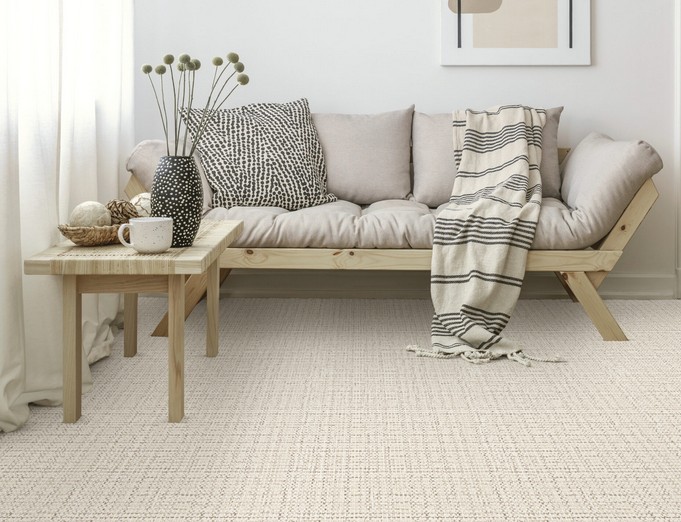
A wool fibre’s natural structure is crimped, elastic and resilient, allowing it to spring back under foot traffic. As a result, it retains its original appearance for longer. Wool carpets routinely outperform synthetic carpets in longevity, often lasting decades with proper care and maintenance. This extended life span translates into fewer replacements, reduced environmental waste and lower lifetime costs. Beyond performance, wool remains one of the most visually desirable carpet materials available. With rich texture, exceptional colour absorption and natural elegance, wool carpet offers a level of sophistication and design versatility unmatched by most synthetic options.
REGENERATIVE BUILDING MATERIAL
Today’s sustainability conversation is evolving from ‘doing less harm’ to actively healing and restoring ecosystems. Regenerative materials support this goal by contributing positively to natural systems rather than merely minimizing damage. This is what distinguishes wool carpet from other ‘green’ flooring materials.
Sheep are part of the natural carbon cycle. By grazing, they play a role in maintaining soil health and promoting vegetation growth, which draws carbon from the atmosphere. The process of sheep eating grass and subsequent accumulation of carbon in the wool fibre actually sequesters carbon from the atmosphere. This biogenic carbon remains locked in the fibre for the life of the carpet, making wool one of the few flooring materials that naturally stores carbon.
Many wool-producing farms operate with regenerative grazing practices like rotating pastureland, improving soil structure, increasing biodiversity, reducing erosion and restoring natural ecosystems. This makes wool one of the few flooring materials whose production can contribute to healthier land and reduced atmospheric carbon.
Wool requires less industrial processing in comparison to petroleum-based carpets. The production process for wool carpet is simpler, gentler and aligned with natural fibre systems rather than energy-intensive manufacturing. The fibre comes with many built-in high-performance characteristics, reducing the need for added chemical treatments.
When wool carpet finally reaches the end of its usable life, it returns to the earth without creating long-term pollution. Its decomposition contributes nutrients back to the soil—literally returning to the earth what came from it. Wool therefore exceeds the standard sustainability marker of ‘doing less harm.’ It participates in ecological restoration and contributes to healthier natural systems.
By embracing wool, the flooring industry can play a crucial role in shifting consumer expectations toward products that support planetary well-being rather than compromise it.
As director of operations at Nature’s Carpet in Vancouver, Jenny De Castris champions sustainable wool flooring solutions. Since 2017, Jenny has combined industry expertise with advocacy, promoting global wool standards and environmentally conscious interiors.
*As recently published in the Winter Edition 2025/2026 of Coverings Magazine